|
 |
| . |
 |
In the seventeenth century
an increase in demand and the diffusion in Europe
of precious Chinese porcelain, encouraged Dutch
ceramicists to manifacture imitations, thereby
invading the markets of the Republic of Venice.
Therefore, in 1728 attempts were made to resolve
the problem by stimulating local production;
taxes were lowered for those who were able to
produce porcelain and improve majolica.A
favourable moment for local production came with Giovanni
Battista Antonibon, when in April 1727 |
in the old
house of his father in Nove, the began what was to become
the most important ceramic factory in the Republic of
Venice. In 1732 the Senate granted Antonibon the
privelege of tax exemption for twenty years, further
aiding local ceramic production. Pasquale Antonibon
succeeded his father in 1738 and in 1762 was successful
in an undertaking of great importance: the production of porcelain.
|
.
. . |
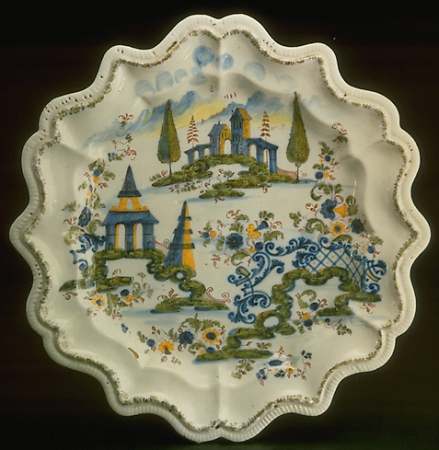
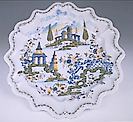
| Large plate in
majolica with decoration of "ponticello"
(small Chinese-style bridge), Antonibon
Manufacture, Nove, first half of the XVIII
century. |
 |
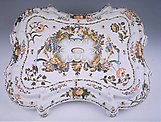 . . |
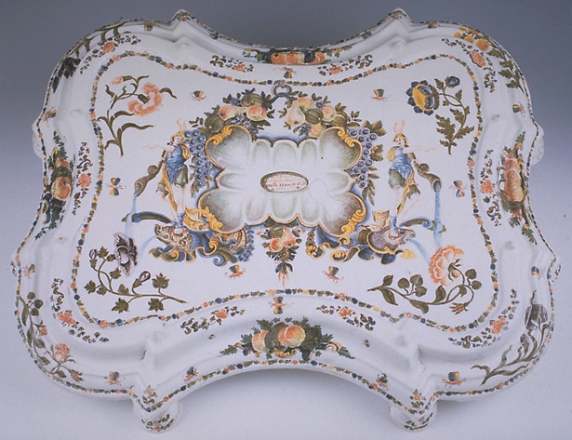
Big
majolica centerpiece,
dated
DellaFabricadiGiBattaAntonibon/Ndi
Vicenza/Anno
1755" |
.
|
| . |
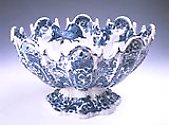
Oval basin with
blue decorum "alla Berain"
G.
B.Antonibon (1728-1738) |
 |
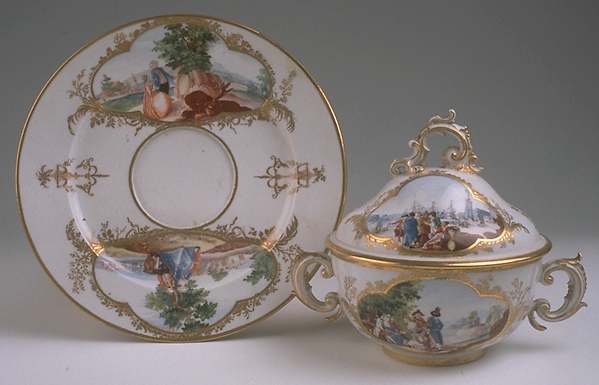
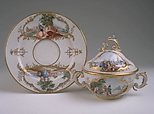 .. .. |
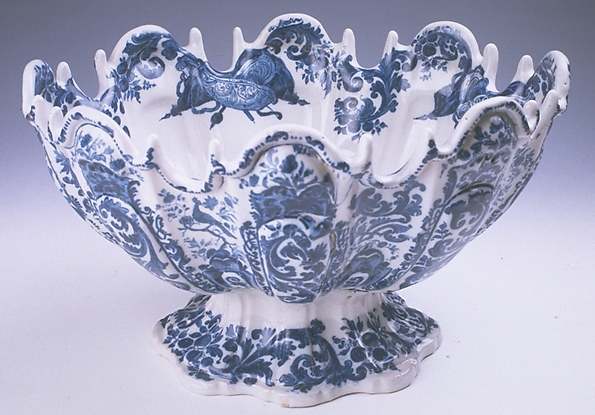
Clear soup
bowl,also said "the puerpera's bowl".
Maufactured by Antonibon, second half of the
XVIII century |
|